Peak: Secrets from the New Science of Expertise
Anders Ericsson and Robert Pool
Book · B0008
Peak: Secrets from the New Science of Expertise
Anders Ericsson and Robert Pool
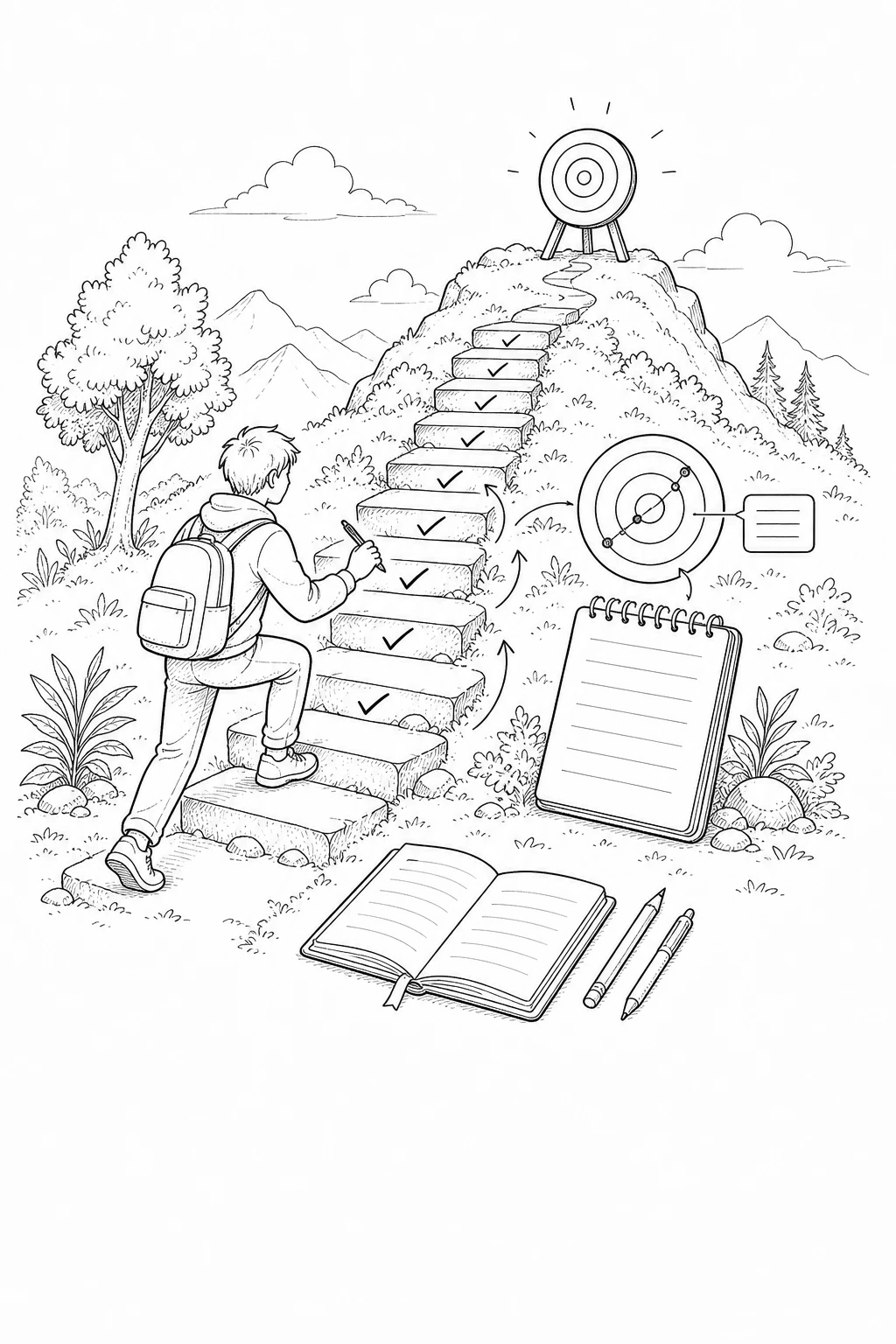
Use "purposeful practice" and "mental representations" to shatter the talent myth — turning any skill into a designable, feedback-driven, sustainable growth system.
13
routes
6
work examples
AI
AI prompts
What can this book help you build?
Peak is not a self-help book — it is a methodology handbook for how to design practice. Ericsson spent 30 years studying top performers — chess players, musicians, surgeons, athletes — and discovered that what separates great performers from the rest is neither innate talent nor sheer repetition, but a specific way of practicing: clear goals, stepping outside the comfort zone, relying on immediate feedback, and continuously rebuilding mental representations. The book overturns the popular misreading of the "10,000-hour rule" — time alone does not produce excellence; only purposeful practice can reshape the structure of the brain. Inside Shufang Island, you can transform this book into your own deliberate practice plan, a skill-breakthrough roadmap, a personal growth archive, or an AI coaching toolkit that helps others push through plateaus.
Best for
- ✓People learning a new skill — an instrument, writing, coding, a language — who feel stuck and aren't making real progress
- ✓Learners who want to upgrade from "practicing every day" to "actually improving"
- ✓Educators, coaches, and trainers who want to accelerate the progress of their students
- ✓People who believe talent sets a hard ceiling and doubt their own potential
- ✓Anyone who wants to use a scientific method to design a learning plan and track results
- ✓Professionals hitting a ceiling in a career skill and looking for a way through
- ✓People who have questions about the "10,000-hour rule" and want to understand what the science actually says
Problems this book can help you solve
- !I've been practicing piano / English / coding for a long time and feel like I'm not making real progress — what's going wrong?
- !I know I need to work hard, but I don't know how to practice effectively — every session just runs on gut feeling.
- !I want to break through my current skill plateau, but I can't figure out which part of my practice is the bottleneck.
- !How do I tell whether my practice is "purposeful practice" or just "naive practice"?
- !My child or student practices a lot but improves very slowly — is it a method problem or a talent problem?
- !I want to design a 90-day skill-improvement plan, but I don't know how to break down the goal or build in a feedback loop.
- !I'm already at an intermediate level in a skill — how do I push past the plateau and keep improving?
- !How do I find the right mentor or reference point to calibrate my mental representations?
- !I want to use AI tools to support my practice and get feedback, but I don't know how to design a concrete workflow.
- !I keep repeating practice inside my comfort zone — how do I design training tasks that are challenging but still within reach?
What do you want to take away?
Complete a 90-Day Deliberate Practice Plan
You'll pick one skill you most want to improve in the near term and design an actionable 90-day practice roadmap using the core elements of deliberate practice (purposeful goals / stepping outside your comfort zone / immediate feedback / mental representation anchors), including specific weekly training tasks and feedback-collection methods.
Map My Mental Representation in a Specific Skill
You'll choose a specific skill you're currently practicing — an instrument, spoken English, public speaking, writing, photography, or anything else — and use the book's concept of 'mental representations' to map your current representational state: the patterns you trigger automatically, the cognitive blind spots you haven't yet formed, and exactly where the gap between you and an expert lies.
Build a Deliberate Practice Growth Archive for One Skill
You will create a deliberate practice growth archive system for a skill you have been practicing long-term (at least 1 month) — including weekly mental-representation progress logs, bottleneck and breakthrough records, mentor/coach feedback summaries, and re-practice plans — resulting in a personal skill growth archive designed to be updated continuously for 6+ months.
Build a Practice Quality Decision Matrix
You'll build a five-dimension scoring matrix — Purpose Clarity / Feedback Specificity / Comfort Zone Challenge / Mental Representation Use / Focus Level — around a real skill you're currently practicing, so you can quickly judge whether today's session was high-quality and lock in your next improvement.
Explain the Core Mechanism of Deliberate Practice in 10 Minutes
You'll choose a real audience (family, colleague, student, friend), design a 10-minute explanation using a skill scenario they're familiar with (e.g., a child practicing piano, you memorizing vocabulary) to clearly explain the three core concepts: 'naive practice vs. purposeful practice,' 'mental representations,' and 'stepping out of your comfort zone.' After hearing it, your audience will immediately change one practice habit.
Build a Deliberate Practice AI Feedback Coach Toolkit
You'll pick a skill you're actively practicing, then design a reusable AI prompt toolkit using Ericsson's 'purposeful practice' framework — including a performance-diagnosis prompt, an improvement-task generator prompt, a feedback-collection prompt, and a mental-representation calibration prompt — so that AI can serve as your deliberate practice coach at any time.
Works you can take away from this book
《My 90-Day Deliberate Practice Plan》
Use the deliberate practice framework to design a 90-day practice roadmap with a built-in feedback mechanism for one real skill you're working on.
Make my own《My Mental Representation Map for English Speaking》
Map out your current mental representation of English speaking versus your target state, and pinpoint the real obstacles blocking your practice.
Make my own《Skill Plateau Breakthrough Decision Matrix》
Apply the purposeful-practice-vs-naive-practice diagnostic framework to analyze why you're stuck right now and choose a clear path forward.
Make my own《Explain Deliberate Practice in 10 Minutes》
Break down the core mechanics of deliberate practice so clearly that a friend, family member, or teammate can start using it right away.
Make my own《Learning Feedback Journal Template》
Build a sustainable daily practice log and feedback review system that lets you accumulate a traceable record of your skill growth over time.
Make my own《AI Deliberate Practice Coaching Toolkit》
Turn the feedback mechanism of deliberate practice into a reusable set of AI prompts you can apply to training any skill.
Make my own