Sapiens: A Brief History of Humankind
Yuval Noah Harari
Book · B0009
Sapiens: A Brief History of Humankind
Yuval Noah Harari
Use Harari's narrative framework to decode the present — see through the 'imagined orders' behind money, religion, nationalism, and consumerism.
13
routes
8
work examples
AI
AI prompts
What can this book help you build?
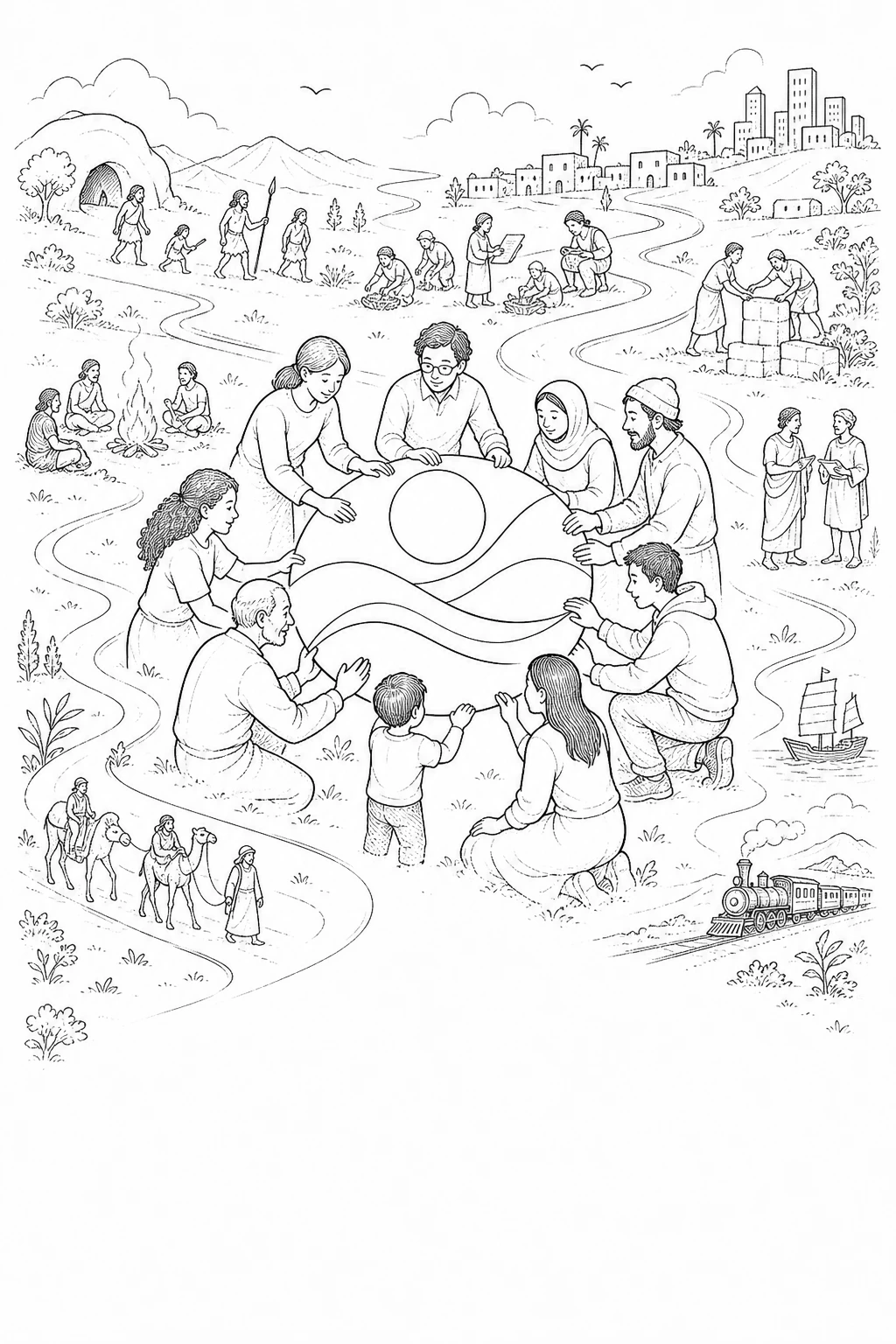
Sapiens isn't a book about history — it's an analytical framework for understanding why the world is the way it is right now. Harari argues that Homo sapiens conquered the world not through strength or tools, but through a unique ability to imagine: we can believe in things we've never seen — money, nations, corporations, religions, human rights — and cooperate at massive scale as a result. Inside the Shufang Islands, this book can be transformed into thirteen different projects: create a deconstruction map of modern social rules, write a research report on the consumerism phenomenon, build an AI toolkit that applies the Cognitive Revolution framework to analyze current events, or use the logic of 'the Agricultural Revolution as history's greatest fraud' to scrutinize your own everyday choices. Every route asks you to wield Harari's narrative tools against the real present — not to retell what's already in the book.
Best for
- ✓You want to understand the structural logic beneath today's news headlines
- ✓You feel confused or curious about where social rules actually come from
- ✓You find yourself carried along by consumerism, nationalism, or authoritative voices without being able to explain why
- ✓You want to use a historical perspective to make career or life decisions
- ✓You feel anxious or lost about where humanity is headed in the age of AI
- ✓You want to transform a dense, important book into a practical set of tools
- ✓You're a teacher, lecturer, or content creator who needs to explain complex concepts to general audiences
Problems this book can help you solve
- !Why do I keep buying things even though I know consumerism is a trap?
- !Why is money worth anything? What's really running behind your credit card statement?
- !Where does nationalism and patriotic emotion come from — and why is it so easy to ignite?
- !Do companies, nations, and human rights 'really' exist? How were they invented?
- !Did the Agricultural Revolution make human lives better? Why does Harari call it 'history's greatest fraud'?
- !Before the Scientific Revolution, what did humans use to explain the world? Where's the boundary between religion and science?
- !Why has capitalism expanded to cover the entire globe? What logic keeps it running?
- !What will the rise of AI turn Homo sapiens into? What does Harari mean by 'intelligent design replacing natural selection'?
- !How does the power structure I experience at work relate to the 'imagined orders' Harari describes?
- !Is the direction of history truly inevitable? What does my individual choice amount to in the grand narrative?
What do you want to take away?
Create a Deconstruction Map of an "Imagined Order"
You'll pick a modern rule or institution you encounter daily but never seriously question—money, corporate hierarchy, academic credentials, consumer promotions, holidays, marriage customs—and use Harari's three-pillar framework of "imagined orders" from *Sapiens* to deconstruct how it was invented, how it's embedded in the material world, how it shapes your desires, and why you willingly obey. Finally, you'll create a deconstruction map you can show and discuss.
Write an investigative report on a contemporary phenomenon using the 'fictional narrative' framework
You'll pick a real social phenomenon—like the LV/Hermès craze, Singles' Day, involution culture, tiger parenting, crypto hype, the 'decluttering' movement, 'Buddhist' attitude, or live-stream shopping—and use Harari's framework from *Sapiens* about 'fictional narratives sustaining large-scale cooperation' to identify the 'shared myth' behind it, analyze why people believe it, who constructs it, and how it might evolve or collapse. You'll produce a structured, analytical, and original investigative report.
Create a Career & Life Decision Matrix for the Age of Intelligent Design
You'll use Harari's big-picture frameworks from *Sapiens* — 'Intelligent Design Replaces Natural Selection,' 'The Agricultural Revolution Trap,' and 'The Three Unifying Forces of Empire, Money, and Religion' — to evaluate a real major decision you're facing (whether to switch jobs, have children, buy a house, start a business, etc.) and build a personal decision matrix with three dimensions: 'AI Replacement Risk × Fictional Narrative Drive × Harari's Historical Logic.' This will help you make a judgment with historical depth, rather than being swept away by present anxiety and collective narratives.
Design an Experiential Co-Reading Activity: 'Experience the Imagined Order'
You'll design an experiential co-reading activity where participants don't just discuss the book's ideas but personally feel how 'collective fictional narratives' work—through role-playing, a currency prototype experiment, an imagined order voting exercise, and other interactive segments. In 2–3 hours, people from different backgrounds will truly experience that the money, laws, corporate hierarchies, and national identities we rely on every day are 'imagined orders' that only function because Sapiens collectively believe in them.
Explain How the 'Cognitive Revolution' Shapes the Modern World in 10 Minutes
You'll pick a real speaking scenario—talk to colleagues, kids, or a book club—and create a 10-minute speech script: hook your audience in the opening, walk through Harari's framework in four beats (Cognitive Revolution → Imagined Order → Agricultural Revolution Trap → Window of Intelligent Design), ground it with a contemporary real-world case, and leave your listeners with a thinking tool they can use tonight.
Build a "Harari Narrative Framework" AI Analysis Toolkit
You'll take the core analytical framework Harari uses in *Sapiens* to examine social phenomena — "identify fictional narrative → trace construction process → recognize maintenance mechanisms → assess real-world impact" — and turn it into a set of prompt templates you can use directly in ChatGPT or Claude. The result is a practical toolkit of at least 5 prompt templates, each paired with a real test case, so you can quickly apply a Harari-style analytical lens whenever you read the news, review a report, or try to make sense of workplace dynamics.
Works you can take away from this book
《My Consumerism Deconstruction Map》
Use the 'imagined order' framework to break down a consumption habit you just can't seem to quit.
Make my own《The Nature of Money: An Investigative Report》
Apply Harari's fictional narrative theory to explain Bitcoin, credit scores, or the phenomenon of tipping live streamers.
Make my own《Cognitive Revolution News Analysis AI Toolkit》
Turn Harari's framework into a set of prompt templates that automatically dissect the narrative structure behind trending news.
Make my own《Explaining 'Imagined Orders' in 10 Minutes》
Turn the book's hardest-to-explain core concept into a script you can deliver to any general audience.
Make my own《My Personal Version of the 'Agricultural Revolution Fraud'》
Use Harari's logic to examine one everyday habit or commitment in your own life that just isn't worth it — but you keep doing anyway.
Make my own《AI-Era Career Decision Matrix》
Use the 'intelligent design replacing natural selection' framework to assess your career direction's viability over the next ten years.
Make my own《Designing an 'Imagined Orders' Co-Reading Experience》
Design a session where participants viscerally feel the power of a shared myth through experiential co-reading.
Make my own《Deconstructing Nationalism: A Research Report》
Pick a recent news event and use Harari's narrative framework to analyze how nationalist emotion was constructed and spread.
Make my own